In 1981, 7 doctors and nurses who obtained an enterostomal therapist license in the United States founded the Japanese Association of Enterostomal Therapy Nurses after returning to Japan. The activities of this association paved the way for the development and establishment of an academic group called the Japanese Society of Wound, Ostomy, and Continence Management.
The Society expanded its scope of activities from stoma care to wound and continence care. While supporting the development of wound, ostomy, and continence management, it grew into an academic organization that develops new techniques and establishes evidence, involving not only skin/excretion care specialists, but also other professionals with different specialties, such as doctors, nurses, and registered dieticians, in addition to nursing, medical, and scientific/engineering researchers who make a concerted effort to further promote team medicine.
We aim at the development of wound, ostomy, and continence management while performing activities for the succession of nursing practice based on established evidence.
It was a great honor to be appointed the sixth President in 2021. Our Society’s highly aspiring predecessors first founded the Japan Enterostomal Therapy/Wound, Ostomy and Continence (ET/WOC) Association, which was then reorganized into the Japanese Society of Wound, Ostomy, and Continence Management (JWOCM) in 2009 and registered as a general incorporated association in 2011. I am deeply humbled to accept the position of President of this Society steeped in such history. I will strive to do my best with your kind support. Thank you in advance for your kind cooperation.
As the sixth President, I intend to continue our past efforts and develop them while leveraging the strength of our broad membership base. One of such efforts is the addition of “check” and “improvement” components to the 4AEPP, putting into place the 4AEPP-CI.


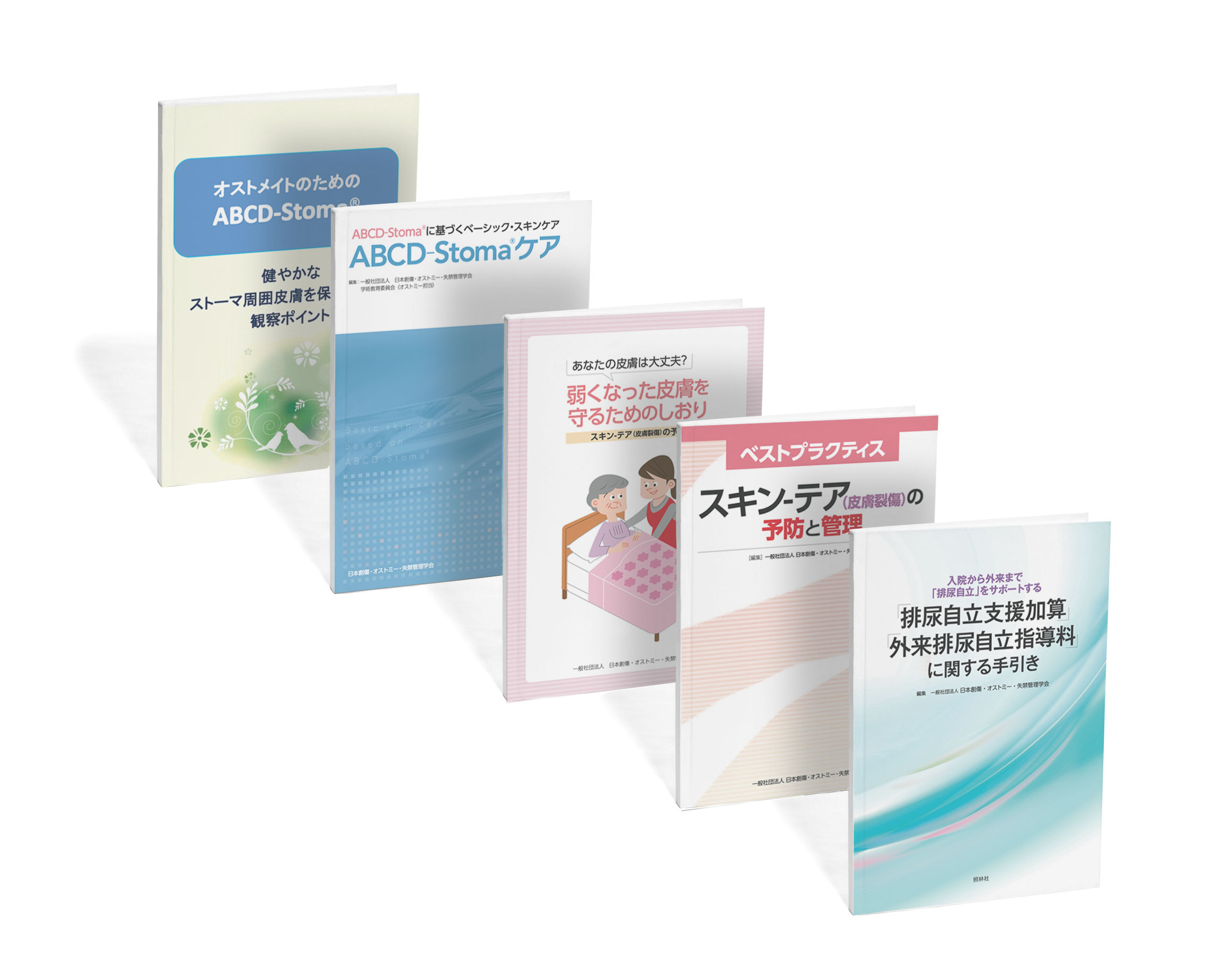
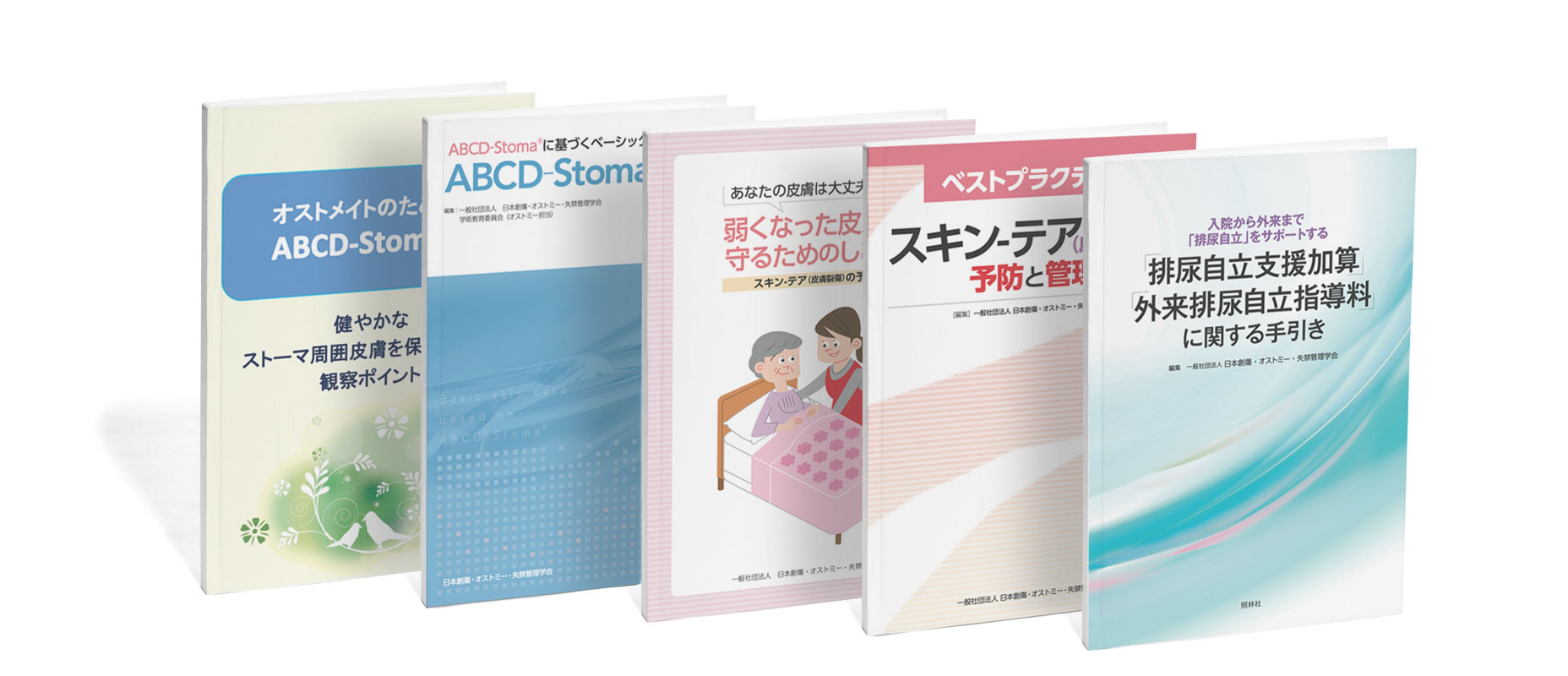
Best practice: Skin tear prevention and management
Skin tears are acute wounds caused by friction and/or slippage in daily medical/care settings, presenting predominantly in the elderly with fragile skin.
The Society examined the crude prevalence of skin tears in Japan in 2014, asking 374 facilities with Society-registered enterostomal therapists and certified nurses in wound, ostomy, and continence nursing to respond to a questionnaire, and obtaining responses from 257 facilities (response rate: 68.7%). The prevalence was 0.77%, as 720 out of the 93,820 patients had skin tears. The prevalence increased to 1.65% among those aged 75 or over.
The recognition of skin tears was previously been poor among health professionals, although they occasionally observed such skin injuries. With neither treatments nor guidelines available, skin tear care was difficult. Therefore, in 2015, the Society created guidelines for skin tear prevention and management. This instruction book consists of the following sections: “An outline of skin tears”, “Current status of skin tears in Japan”, “Algorithms for skin tear prevention and management”, “Development of skin tears and preventive care”, and “Skin tear management”.
ABCD-Stoma®-based Basic Skin Care Tool “ABCD-Stoma® care”
As pain, itching, and difficulty attaching prosthesis due to peristomal skin disorders may reduce the QOL of ostomy patients, the early management of these disorders and prevention of their recurrence by health professionals are essential. Furthermore, priority should be given to severity assessment and appropriate care provision by health professionals from the perspective of patients at all times.
Our idea was to devise an appropriate skin care method for both health professionals and ostomy patients using a scale to objectively assess the severity of peristomal skin disorders. In 2012, we developed such a scale called “ABCD-Stoma®”. As a characteristic of “ABCD-Stoma®”, it enables all health professionals to easily find appropriate skin care goals and methods. In 2013, we also created the ABCD-Stoma®-based skin care tool “ABCD-Stoma® care”. This issue introduces ABCD-Stoma® with its scoring method and usage.
Moreover, to provide ICT support, we developed a smartphone application using ABCD-Stoma®.
Click here to access an English web page for “ABCD-Stoma®” and “ABCD-Stoma® care”.
AIAD-set System “IAD Best Practice”
In Japan, the prevalence of incontinence is particularly high among the elderly. More than 50% of those aged 60 or over have urinary incontinence. Furthermore, more than 8.7% of all males and 6.6% of all females aged 65 or over have fecal incontinence. The prevalence of incontinence-associated dermatitis (IAD) is reportedly 17%. The exposure of skin to urine or feces due to urinary or fecal incontinence causes discomfort, and the development of dermatitis leads to distress such as pain and itching. Thus, IAD may be associated with decreased QOL. Considering this, we developed a scale to measure the severity of IAD (IAD-set) in 2016 and created the IAD-set system “IAD Best Practice” in 2018.


To promote preventive care for people with an increased risk of skin disorders, we train clinical nurses specializing in skin care through the Society’s certification system. Through training seminars, we help these nurses acquire knowledge of skin care and learn standard manual techniques to perform it, with a view to improve the quality of preventive skin care and people’s welfare.
To help people maintain the ability to urinate independently and continue to live freely, we also train continence care team nurses. In 2016, the government of Japan began to allow medical fee calculations for urination guidance and support to promote independence. As a requirement of such calculations, a continence care team should be organized through collaboration with doctors, nurses, physical therapists, and occupational therapists. Other requirements include: assessing all inpatients’ urinary conditions, conducting assessment of lower urinary tract function to examine their ability to urinate independently, creating and implementing comprehensive continence care plans, and evaluating outcomes. The Society trains continence care team nurses through collaboration with other academic societies.


For the development of wound, ostomy, and continence management, the Society also actively communicates and cooperates with many academic bodies in other countries, such as the World Council of Enterostomal Therapists (WCET) and Asia Pacific Enterostomal Therapy Nurse Association Conference (APETNA), and other academic societies in Japan.



 ストーマ外来検索



